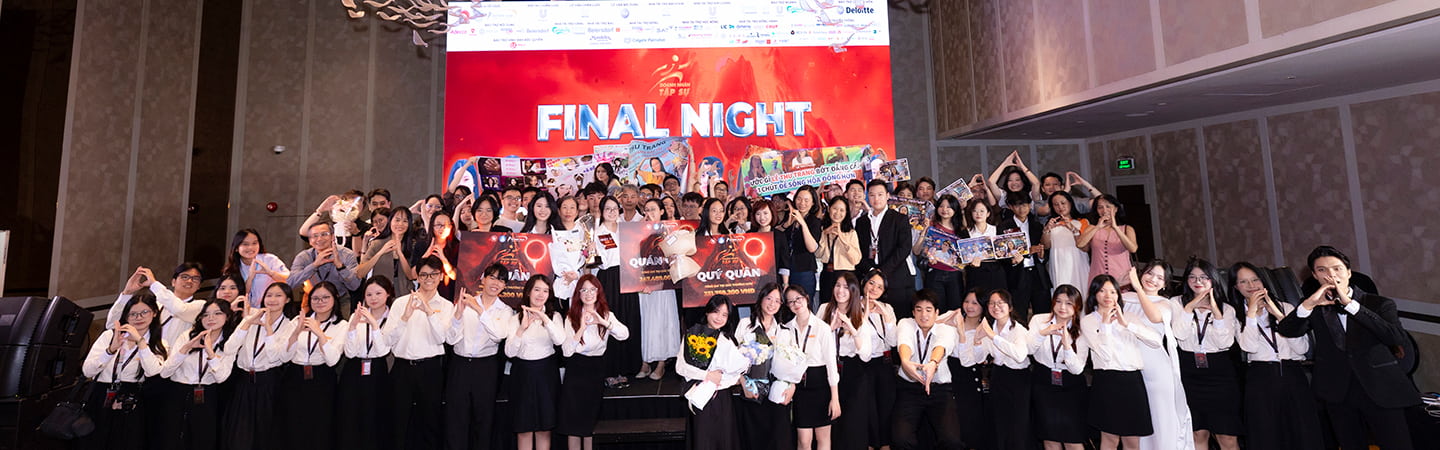
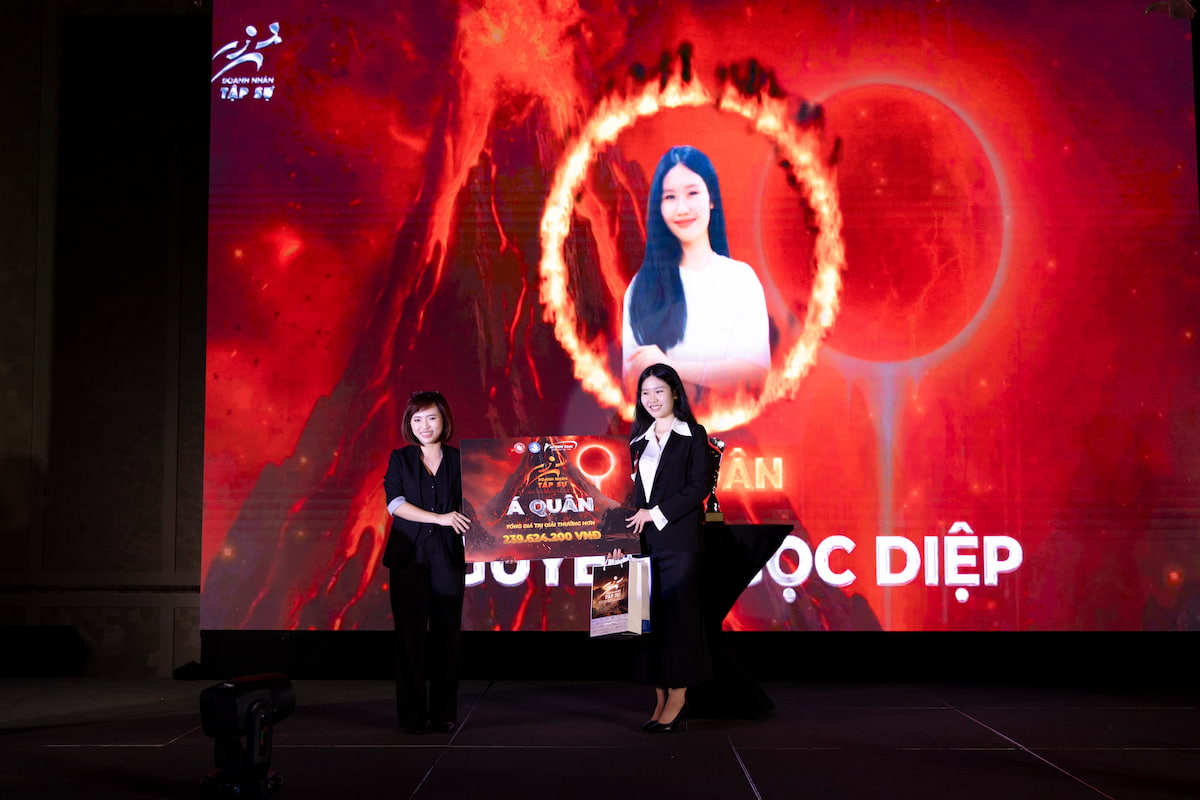
The achievement also extends RMIT Vietnam's strong track record at the competition, marking the third consecutive year that an RMIT student has reached the competition's top tier.
Now in its 11th year, DNTS simulates a corporate management trainee recruitment process through a series of increasingly demanding assessments. Contestants tackle real business challenges spanning marketing, finance, human resources, logistics and sales, presenting and defending their solutions to senior industry leaders from Unilever, Nestle, Suntory PepsiCo, Procter & Gamble (P&G), etc. This year's edition featured cases from P&G and Deloitte.
For Diep, success came not from specialising in a single discipline, but from seeing the bigger picture.
“The biggest difference was synthesis,” she said.
“A DNTS case presents challenges from every business function at once. It is easy to get lost treating each symptom on its own. Beyond delivering a strong marketing proposal, what gave me an edge was pulling everything into a single-issue tree, tracing it back to one root cause, and building a focused recommendation tied to commercial outcomes.”
That ability to simplify complex business problems also proved crucial under pressure.
“One judge asked me to pitch my idea again in just 30 seconds. I had to compress a cross-functional analysis into one compelling narrative. Making complex logic simple enough for judges to follow and believe is what I think set my cases apart.”
The Grand Final challenged finalists with two vastly different scenarios. “The first, from P&G, focused on driving category growth rather than simply growing a product or brand. The second, from Deloitte, required participants to develop a strategy for the healthcare sector, an unfamiliar industry for all of us”, Diep recalled.
On top of that, the format made it even more demanding.
“In the first round, we had a full week to crack the case, present it, debate a rival team, and defend our thinking before the judging panel. The second round flipped that entirely: just 12 minutes to solve a brand-new case and face the judges' Q&A. The time pressure was relentless.”
Despite the contrasting formats, Diep relied on the same disciplined approach: find the objective first.
“For the marketing piece specifically, I believe two things decide everything: a sizable source of growth and an accurate insight. Get those two right, identify where real growth can come from and the human truth that unlocks it, and the rest of the strategy follows naturally.”
Diep credits much of her success to RMIT's industry-engaged learning environment, where students regularly work on live business briefs and present their ideas directly to industry professionals.
“At RMIT, industry partners regularly come into our classrooms to set live briefs and provide feedback,” she said.
“Term after term, I pitched real ideas to real decision-makers, learned to hold my nerve under their toughest questions, and treated every critique as fuel to sharpen the next idea. All that practice gave me the stage presence and composure to deliver a polished, confident performance on the Grand Final night.”
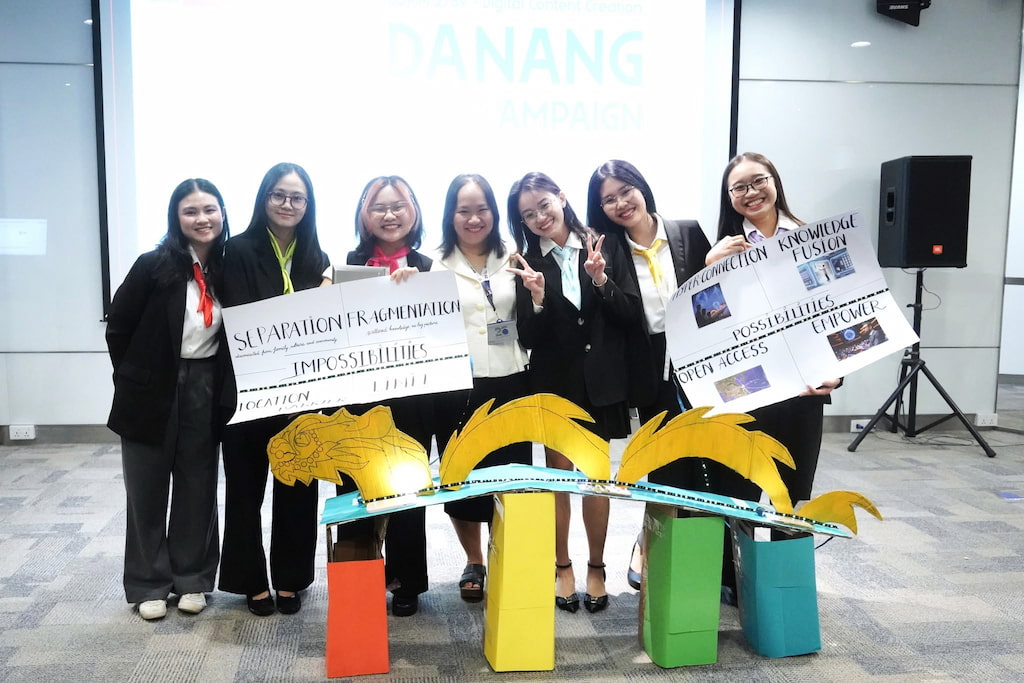
Throughout her studies, Diep has consistently demonstrated academic excellence, achieving the highest course results in Digital Content Creation, and Social Media and Mobile Marketing. She has also led her teams to victory in five industry pitching challenges, showing both her analytical thinking and persuasive communication skills.