


In the 6G era, distance won’t protect your devices anymore

In the 6G era, distance won’t protect your devices anymore

As 6G networks become a reality, everyday devices like smartwatches and smart locks may suddenly become reachable from anywhere. RMIT’s Dr James Kang explains why this shift matters for your security.

Smart devices such as smartwatch, health trackers, and home automation systems are typically designed to operate within proximity to their users. This assumption shapes how users perceive both functionality and security. But soon, that may not be true anymore. A shift is already beginning. Services like Starlink use satellites to provide internet access almost anywhere, showing how devices are no longer limited by traditional network boundaries. 

With 6G mobile networks, which are expected to work closely with AI, wireless IoT devices currently being connected via small coverage network such as Bluetooth may connect through satellites, meaning they could be reached from almost anywhere in the world. This may sound like a small change, but it has big consequences for security. 

This is especially important in Vietnam. Viettel, the 5G pioneer in the country, aims to commercialise 6G by 2029. Meanwhile, Ho Chi Minh City plans a 6G network pilot as soon as this year. This places Vietnam among the early adopters, as 6G is expected to begin rolling out globally around 2030, starting in leading markets before expanding more widely.

So, security concerns with 6G are not some far-away ideas. It is something that will soon affect daily life in Vietnam.

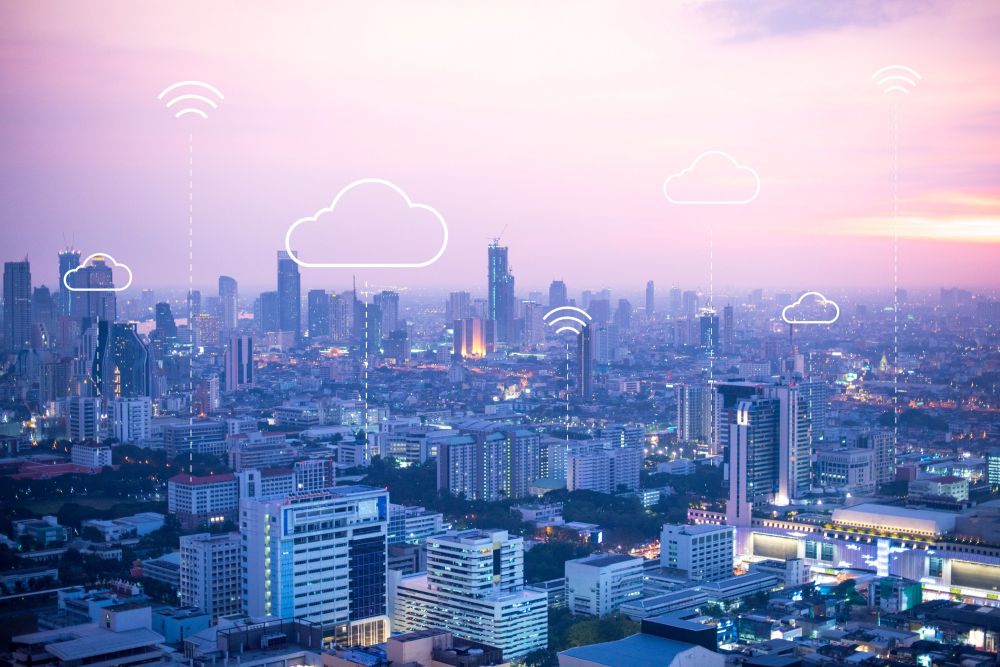
Cityscape with mobile connection iconsWith 6G mobile networks, wireless IoT devices currently being connected via small coverage network such as Bluetooth may connect through satellites. (Photo: Freepik)

The key point is simple. In the 6G era, distance will no longer protect your devices. In the past, many wireless devices were designed with the idea that only people nearby could access them. A fitness tracker, such as a Fitbit, stays close to your phone, and a smart lock for your car or home is usually controlled when you are nearby. That sense of “being nearby” gave people a feeling of safety. But that idea is starting to break.

In 2024, US startup Hubble Network became the first company to connect a Bluetooth device on the ground with a satellite about 600 kilometres away. Bluetooth was designed for very short distances like connecting your smartphone to your headphones, yet it was able to reach space.

This tells us something important. Devices we thought were local are no longer local. A device in your home could be visible far beyond your surroundings, and an attacker does not need to be nearby anymore. They simply need a way to connect, and with a bit of preparation, a successful attack is entirely possible.

Vietnam is already seeing fast growth in connected devices, which makes this more serious. The number of IoT devices was expected to reach around 96 million by 2025, up from about 21 million in 2018, and in 2026 it is likely even higher. This means more devices will be online all the time and exposed to much wider networks.

At the same time, companies like Viettel, VNPT, and FPT Corporation are building systems for smart homes, cities, and industries. As 6G develops, many of these devices could move from being local to globally reachable. If they are not well protected, someone far away could try to access them.

Dr James Kang portrait photoDr James Kang, Senior Lecturer in Computer Science, RMIT University Vietnam (Photo: RMIT)

So, what should change? The biggest shift is how we think about security. In the past, some devices were built with basic protection because they were not expected to be widely exposed. That is no longer enough. Devices now need to be built as if they are always reachable. Every connection should be checked, software should be easy to update, and data should be protected even for simple tasks. If one device is attacked, it should not affect everything else.

For companies, this means taking security seriously from day one. Devices should be reachable but not accessible without permission, using strong encryption and secure logins, and blocking unknown connections. For users, it means doing basic things well, like changing default passwords and keeping devices updated. In the end, the idea is simple. In a 6G world, your device is no longer safe just because it is close to you. It is only safe if it is locked down, regularly updated, and open only to trusted access.

Looking ahead, this shift will likely happen faster than many people expect. As satellite networks grow and 6G develops, more everyday devices will quietly become part of a much larger, always-connected system. What feels new today could soon become normal. The challenge is that security often lags behind convenience. If developers and companies do not act early, millions of devices could be exposed before people even realise the risks. This is why thinking about security now is not just important, it is necessary.

Story: Dr James Kang, Senior Lecturer in Computer Science, RMIT University Vietnam

Masthead image: WrightStudio – stock.adobe.com

Related news