
It focuses on tackling critical issues in management, people, and organisations, with a particular focus on Southeast Asia and Vietnam. Bringing together an interdisciplinary and collaborative team, the cluster advances knowledge and practice across human resource management, global business and strategy, and tourism and hospitality to address contemporary challenges and drive meaningful impact.
This research cluster brings together scholars whose work examines organisations, entrepreneurship, leadership, work, and tourism as socially embedded, culturally situated, and dynamically evolving phenomena. Drawing on diverse theoretical traditions and methodological approaches, the cluster advances understanding of how individuals, organisations, and destinations respond to uncertainty, crisis, technological change, and societal transformation, particularly in emerging and transitional contexts.
At its core, the cluster is united by an interest in human agency, meaning, and experience, in how values, identities, emotions, and capabilities shape entrepreneurial action, leadership practices, employee outcomes, and consumer or tourist behaviour. Members of the cluster engage in both theory-building and synthesis (e.g., systematic literature reviews, conceptual frameworks) and empirical inquiry (qualitative, quantitative, mixed-methods), contributing to cumulative and impactful scholarship.
Translating theory into practice and knowledge sharing to influence policy, organisations, communities, and destinations by addressing entrepreneurship, leadership, wellbeing, sustainability, and societal challenges
Building interdisciplinary and cross-sector collaboration among academia, industry, and government to co-create knowledge and solutions, capacity and meaningful impacts relevant to regional and global contexts
Advancing theory and evidence through systematic reviews, innovative methods, and context-rich studies that integrate culture, leadership, work, entrepreneurship, and tourism

The Management, Tourism and Organisational Change (MTOC) Cluster brings together scholars with expertise in management, tourism, organisational studies, and strategy. Our research focuses on understanding how organisations and industries adapt to rapidly changing economic, technological, and institutional environments. Key areas of expertise include:
The cluster emphasises interdisciplinary and policy-relevant research, particularly in the context of Vietnam and other emerging markets.
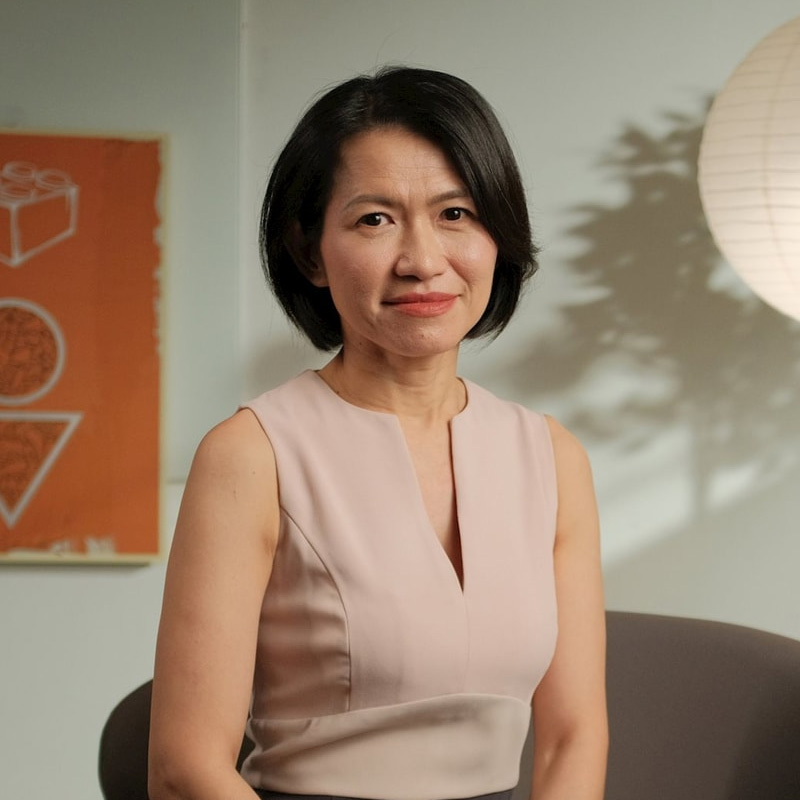
Associate Professor Elaine Chew carries the role of Interim Head of Department, and Associate Head of Department (Research & Innovation) for the Department of Management at The Business School, RMIT Vietnam (Saigon South Campus). Her research focuses on HRM (psychological contract breach, expatriate management, employer branding), and strategy (tourism, knowledge management, digital, education, communication). She has published in A* and A ranked journals such as Human Resource Management (A* FT50), Journal of Construction Engineering and Management (A*), Tourism Management (A*), Annals of Tourism (A*), International Journal of Human Resource Management (A) and Knowledge Management Research & Practice (A). She enjoys research the most when she is challenged by novelty and uncertainty, which compel her to stretch theoretical boundaries and advance the literature together with her colleagues.
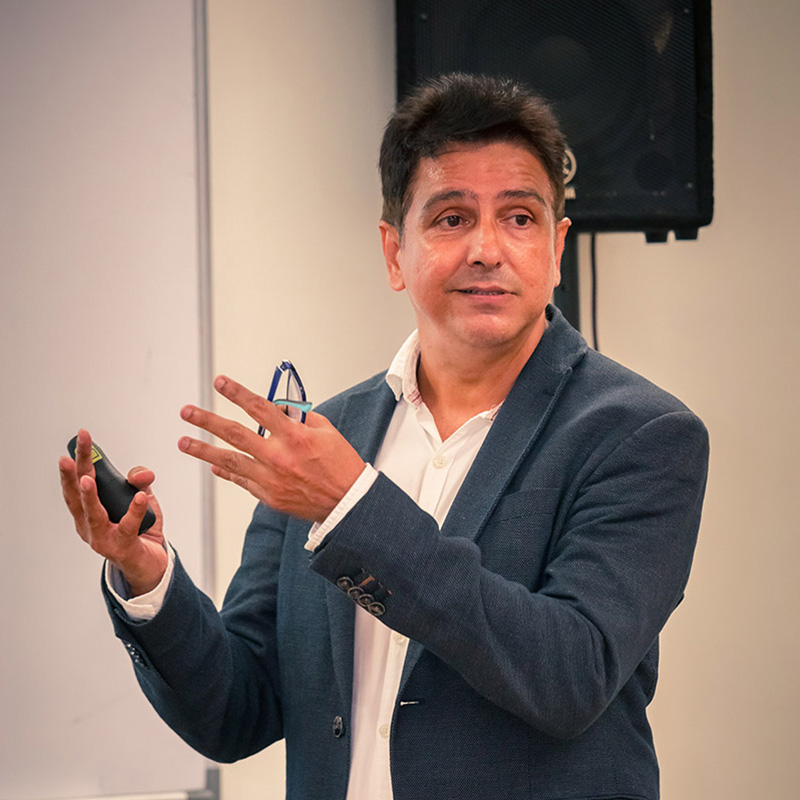
Dr Manjit is a Senior Program Manager for the Management and Change major and a Senior Lecturer at The Business School, RMIT Vietnam (Saigon Campus). His research focuses on internationalization of firms, knowledge sharing and hiding, entrepreneurship, and sustainability, including CSR and ethics. He has published extensively in high-ranked international journals such as the Journal of Business Ethics and International Business Review. His work also appears in outlets including the Journal of Knowledge Management, International Journal of Emerging Markets, and Journal of Retailing and Consumer Services. Through his research and teaching, he contributes to advancing knowledge in strategy, innovation, and responsible management.
Corporate social responsibility (CSR) has gained increasing global attention as an important mechanism for enhancing corporate reputation, innovation, and customer trust, thereby contributing to sustainable business performance. While CSR research has traditionally focused on large corporations, small and medium enterprises (SMEs) have received comparatively limited scholarly attention despite their growing involvement in CSR initiatives. SMEs often face resource constraints and survival pressures that make CSR adoption challenging, yet recent trends show rising engagement in CSR activities. This research investigates CSR adoption among SMEs in Vietnam, an emerging economy where institutional pressures and market expectations are increasing. The study examines the determinants, strategies, organization, and impacts of CSR practices among SMEs and how they balance economic and social objectives.
This GPE KIX-funded project advances evidence-based, technology-enabled professional development for early childhood teachers in Viet Nam, strengthening teacher agency, wellbeing, and STEM teaching capacity, whilst generating knowledge to inform policy, scaling, and national reform in the ECE sector through HNUE–RMIT collaboration.
This Google-funded project investigates how AI chatbots can provide personalised, timely support for early childhood educators in Viet Nam, strengthening professional growth, reflective practice, and teaching quality, whilst generating evidence on scalable, AI-enabled support for teachers across diverse contexts.
This project seeks to strengthen the quality and sustainability of vocational training services targeting ethnic minority women in Lao Cai wishing to engage in the tourism and hospitality sector that offers diverse opportunities. With capability building, ethnic minority women may be in a better state to access opportunities. The project aims to build the College’s capacity to meet the growing skills gap challenge facing ethnic minority women in the sector, by strengthen institutional services
This project examines past literature on gamification, serious play, playful learning, and game-based learning to unveil the conceptually fragmented literature. This study goes to the core to understand how literature has evolved organically that brought about noise, and overlapping and yet conflicting definitions. It also aims to offer conceptual mapping and identify research gaps.


