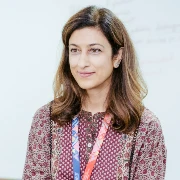
Sheba Saeed
Details
 Department: School of Communication & Design
 Campus: Hanoi Campus Vietnam
 sheba.saeed@rmit.edu.vn
 ORCID: 0000-0002-8100-2336
Open to
- Masters Research or PhD student supervision
About

Research fields
- 330316 Visual communication design (incl. graphic design)
- 440107 Social and cultural anthropology
- 470205 Cultural studies of agriculture, food and wine
- 441008 Sociology of culture

UN sustainable development goals
- 1 No Poverty
- 10 Reduced Inequalities
- 11 Sustainable Cities and Communities
- 2 Zero Hunger
- 3 Good Health and Well Being

Teaching interests
Media and Communication; Cultural studies; Communication theories; Media theories; History of media; Modern Asia; New Media; Exploring popular Asian cultures; Cinema and Nation; Introduction to Cinema; Making Media; Professional Communication Foundations

Research interests
These include areas such as poverty, religion, film, creative documentary, cultural studies, visual ethnography, cultural studies, semiotics, visual analysis. I have conducted extensive research on the topic of begging and the consequences of social exclusion and have been using the medium of film. I am currently writing a book on the transgender communities of Lahore and Karachi. My current projects are practice based research on Vietnamese culinary heritage as well as the production of a creative documentary