AI could help Vietnamese filmmakers punch above their budgets

AI could help Vietnamese filmmakers punch above their budgets

Mr Nguyen Trong Khoa, Program Manager of the Digital Film & Video program at RMIT Vietnam, discussed how AI could empower Vietnamese filmmakers by lowering production barriers and helping them bring bigger stories to the screen.

Q: What is artificial intelligence (AI) filmmaking, and why could it be particularly empowering for Vietnamese screenwriters and filmmakers?

Mr Nguyen Trong Khoa: I would define AI filmmaking as the use of machine-learning across the film production process. A writer who cannot afford a full development team can use AI to test a premise, generate a producer's deck, explore alternative scenes or ways of structuring the story, or visualise a location, time period or action sequence before money is committed. AI can be used for translation from Vietnamese to English to reach international screenwriting competitions and funding sources. 

This matters because Vietnam's market is growing fast, but quite unevenly. While the 2025 box office revenue reached 5,593 billion VND, the film industry still faces gaps in screenwriting, visual effects (VFX), sound design, financing and infrastructure. The Vietnamese Government's cultural industries strategy now treats film as a priority technology-driven creative industry. AI can shift scarce human labour toward higher-value creative endeavours. The most empowering model is not “AI replaces Vietnamese filmmakers,” but “Vietnamese filmmakers use AI to compete above their budget level.”

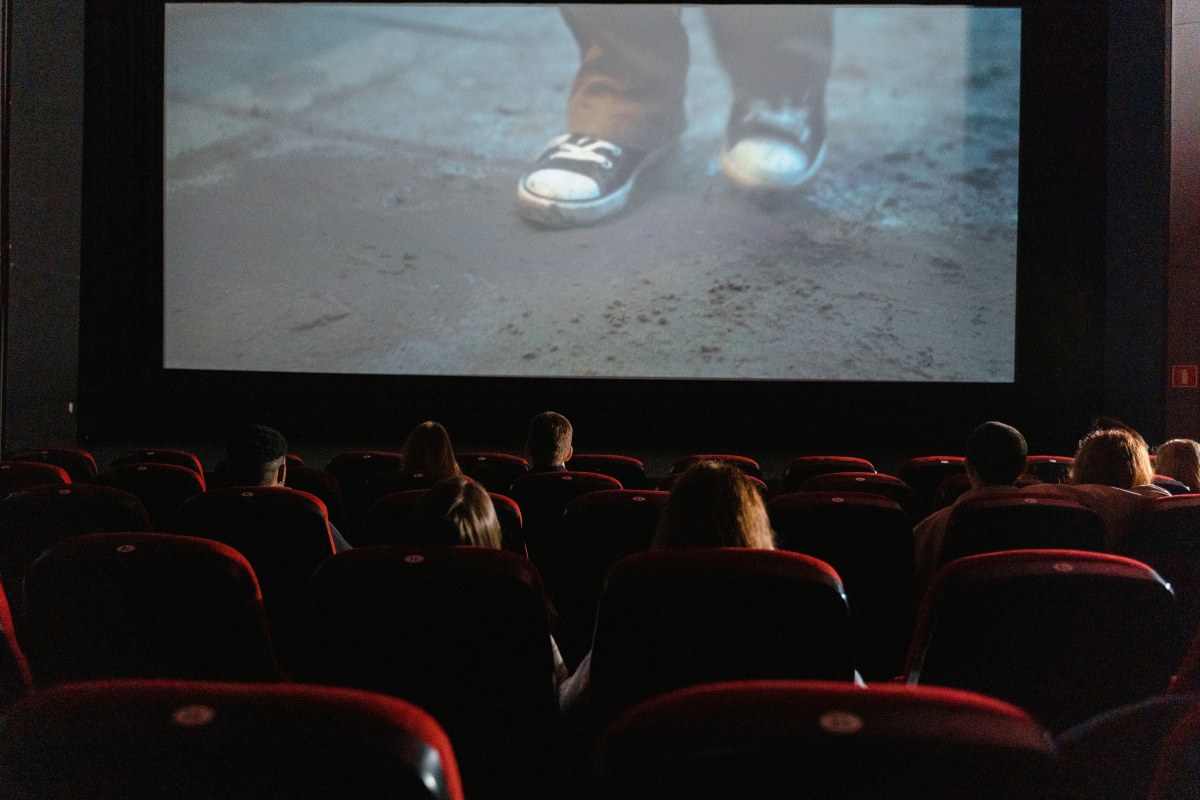
AI could empower Vietnamese filmmakers by lowering production barriers and helping them bring bigger stories to the screen. (Image: Magnific)AI could empower Vietnamese filmmakers by lowering production barriers and helping them bring bigger stories to the screen. (Image: Magnific)

Q: How could AI change the way Vietnamese screenwriters develop, visualise and bring their stories to the screen?

Mr Nguyen Trong Khoa: AI could make the writing process more efficient and effective. A Vietnamese screenwriter can ask an AI for research assistance on a historical period, brainstorm moral dilemmas for a character, compare structures, or generate “what if” variations without compromising on ownership of the story. Used well, AI behaves like a powerful researcher, creative assistant or writing team in the room. It may offer alternative angles, patterns and references, while the writer decides which is the most emotionally true and tone consistent.  

AI applications such as ChatGPT can be found helpful for formatting, structure, conflict and action description, and grammar and spelling fixes, but relatively weak at authentic local experience. The human writer must remain the source of cultural truth. 

Visually, AI can be used to turn a paragraph into mood boards, storyboards, animatics, shot lists or even rough video tests. Still, newer video systems advertise greater control over camera angle, consistent characters, locations and audio, making pre-visualisation more cost-effective for small teams.  

The biggest danger of using AI widely in the filmmaking pipeline is generic storytelling and style as AI generally works toward the median. However, the clear opportunity is faster iteration, variations, and experimentation before costly production begins.

Q: Which genres, formats or types of Vietnamese stories could benefit most from AI-assisted filmmaking? 

Mr Nguyen Trong Khoa: Vietnamese stories that require worlds larger than the budget permits or too difficult or impractical to recreate would benefit most. This includes folk fantasies, historical epics, war films, science fiction, and animation. AI could help Vietnamese filmmakers test creatures, costumes, locations, battle scenes, ghosts, dream sequences and impossible camera moves before they spend big budget on sets, special effects (SFX) makeup, costuming or VFX. 

This is particularly important because Vietnam's recent box office successes have come from culturally resonant domestic films. Vietnamese films represented about 62 per cent of 2025 box office revenue, with war films and historical dramas such as Mua do (Red Rain) and Tu chien tren khong (Hijacked) performing strongly, while horror remained a scalable local genre. TVCs, brand stories, short films, music videos, proof-of-concept trailers and streaming-first series would benefit because they don’t require the presence of recognisable stars and AI lowers the cost of pitching, visual development, production, and even post-production. 

While the primary objective should be cultural specificity, AI can be extremely useful when it helps Vietnamese filmmakers visualise Vietnamese memory, landscapes, folklore, migration, class, family and youth culture. It should not be used to mimic or be identical renderings of internationally imported content.


Mr Nguyen Trong Khoa, Program Manager of the Digital Film & Video program at RMIT Vietnam (Image: RMIT)Mr Nguyen Trong Khoa, Program Manager of the Digital Film & Video program at RMIT Vietnam (Image: RMIT)

Q: What should Vietnamese screenwriters consider when writing scripts intended for AI-assisted production?

Mr Nguyen Trong Khoa: Vietnamese screenwriters should write for AI-assisted production with utmost clarity. The screenplay will still need characters, themes and conflict, but it should also give practical visual information: period, setting, texture, weather, camera distance, movement, sound, costume logic and continuity. AI tools have shown a tendency to respond better to specific visual intention than to vague mood. 

Screenwriters may also need to think modularly. They need to determine which scenes need live action, which need AI-assisted pre-visualisation, which can use generated backgrounds, and where human performance is non-negotiable.

At the same time, they should do everything they can to protect authorship. Writers should keep drafts, prompts, references and revision history, disclose AI-generated material where required, and avoid using protected images, voices, music or scripts as prompts without rights clearance. 

Q: What opportunities and challenges could AI create for Vietnam’s film industry?

Mr Nguyen Trong Khoa: AI will certainly lower production barriers by reducing the cost of development and of creating a proof of concept, which includes concept art, look books, pitch decks and trailers, subtitles, rough VFX, clean-up, dubbing tests and social-media assets. 

For emerging Vietnamese filmmakers, this could mean approaching producers, distributors or co-production markets with a stronger visual package, even without major financial backing. This is especially important because Vietnam's film industry is commercially vibrant but still quite fragmented. Limited film funds, underdeveloped incentives, modest production infrastructure and shortages in high-end technical labour are identified as key factors holding the Vietnamese film industry from flourishing. 

The goal should be training, rights protection and the development of hybrid production strategies. 

Of course, there will be lots of pushback and growing pains initially, but being an early adopter may position Vietnam well for the film industries inevitable pivot to less expensive and less risky means of filmic storytelling. This will open new doors to potentially new industries, new techniques and technologies, and new faces with passion, a voice, and a burning desire to share local stories with the world.

Story: June Pham

11 September 2026

Share

Related news