
Separating signal from noise in AI-powered financial markets

Separating signal from noise in AI-powered financial markets

As investors increasingly draw on news, social media and other alternative data sources, RMIT researchers are examining how AI-generated sentiment signals can be tested before they inform investment decisions.

AI is now being used to analyse news headlines, company disclosures, social media discussions and other forms of unstructured data that can influence financial markets. Yet a crucial question remains: how much of that information provides meaningful insight, and how much is simply noise?

That question was at the centre of “Signals and noise: AI-assisted decision making in finance and business”, a forum hosted by RMIT Vietnam's Centre for Business and Emerging Technologies (CBET).

At the event, researchers and industry experts from RMIT Vietnam, AIPrime, MERIDAQ and Dragon Capital shared diverse insights into the growing role of AI in finance and business decision-making.

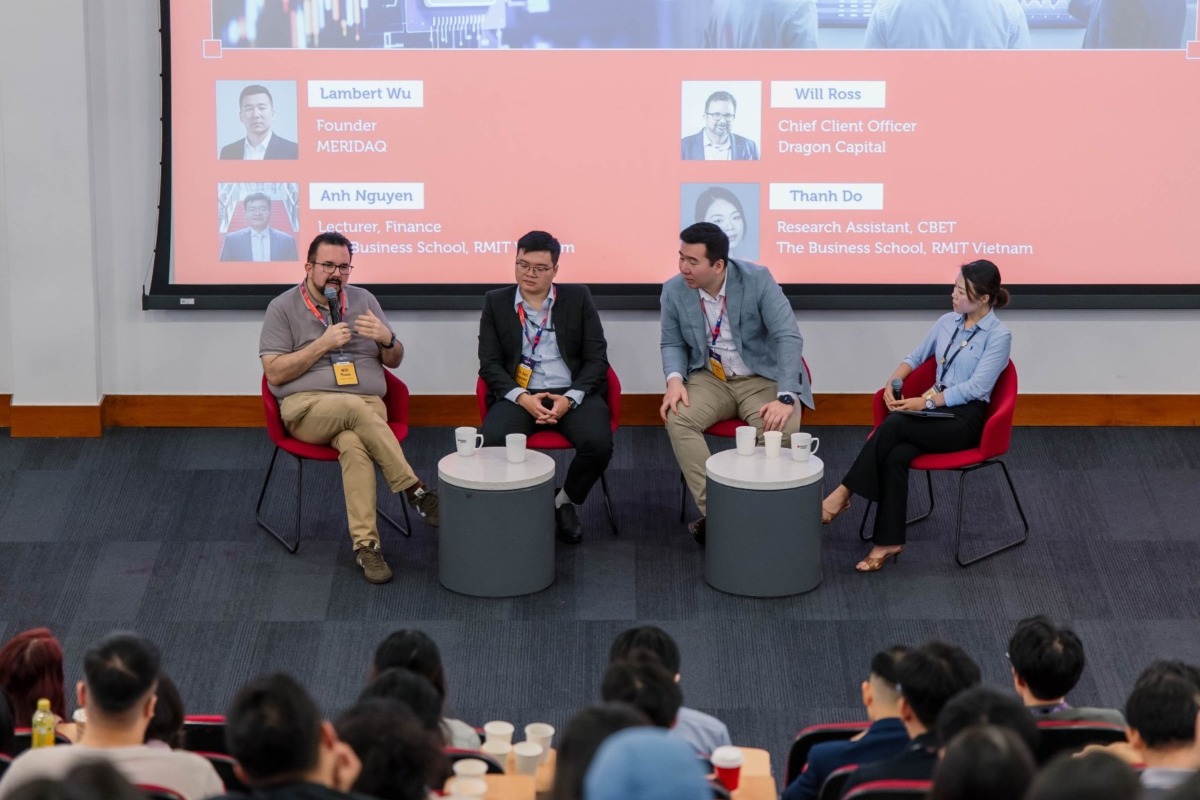
Four people in a panelA panel discussion featuring Mr Will Ross - Chief Client Officer of Dragon Capital, Dr Nguyen Tuan Anh – RMIT Lecturer, Mr Lambert Wu – Founder of MERIDAQ, and Ms Do Nguyen Hai Thanh – CBET Research Assistant. (Photo: RMIT)

Among the highlights was a showcase of a new research project led by CBET researchers that will examine whether AI-derived sentiment signals can be linked to movements in commodity markets.

According to Associate Professor Nguyen Thanh Binh, Associate Head of Department, Economics and Finance at RMIT Vietnam and CBET co-lead, advances in AI are changing the role technology plays in financial markets.

“AI is moving beyond helping people analyse information and is becoming increasingly involved in decision-making processes themselves,” he said.

“This creates exciting opportunities, but it also raises important questions about market transparency, efficiency, and stability as agentic AI increasingly facilitates or takes over financial decision-making.”

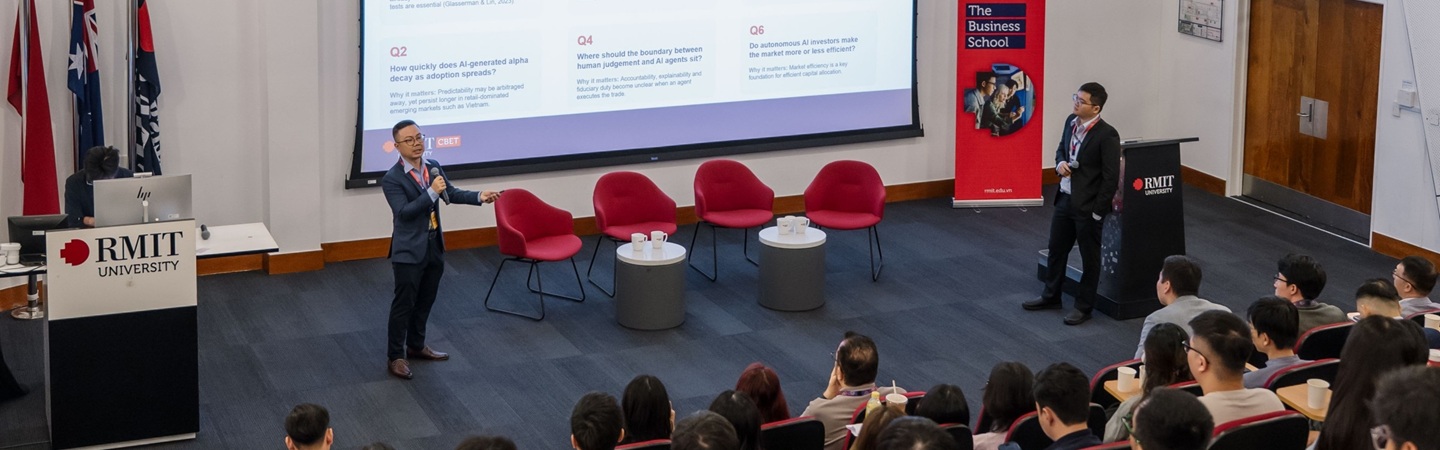
Associate Professor Nguyen Thanh Binh speaking at the eventAssociate Professor Nguyen Thanh Binh speaking at the event (Photo: RMIT)

The project focuses on commodity markets like gold and silver, where investors now pay attention to both traditional indicators and market narratives emerging from news reports, online discussions and other sources of alternative data. According to RMIT researchers, the rapid growth of alternative data has created both new opportunities and new challenges for market participants.

Dr Nguyen Tuan Anh, a lecturer in Finance at RMIT Vietnam and chief investigator of the project, said tools for analysing market sentiment have become increasingly sophisticated, but many questions remain about how their outputs should be interpreted.

“Many existing tools are very effective at extracting signals from large volumes of text. What remains less clear is whether those signals consistently correspond with actual market movements,” he pointed out.

“That validation step is particularly important when people are making real financial decisions.”

The 12-month research project will investigate whether sentiment extracted from financial news and other public text sources shows statistically meaningful relationships with short-term movements in gold and silver prices. The work will combine natural language processing techniques with econometric analysis and contribute to the development of a modern market sentiment index.

“We are interested in distinguishing genuine signals from noise,” Dr Tuan Anh said.

“Our hypothesis is that unstructured financial text may capture changes in investor sentiment before those shifts become visible in more traditional data sources. The purpose of the research is to test that rigorously rather than assume it.”

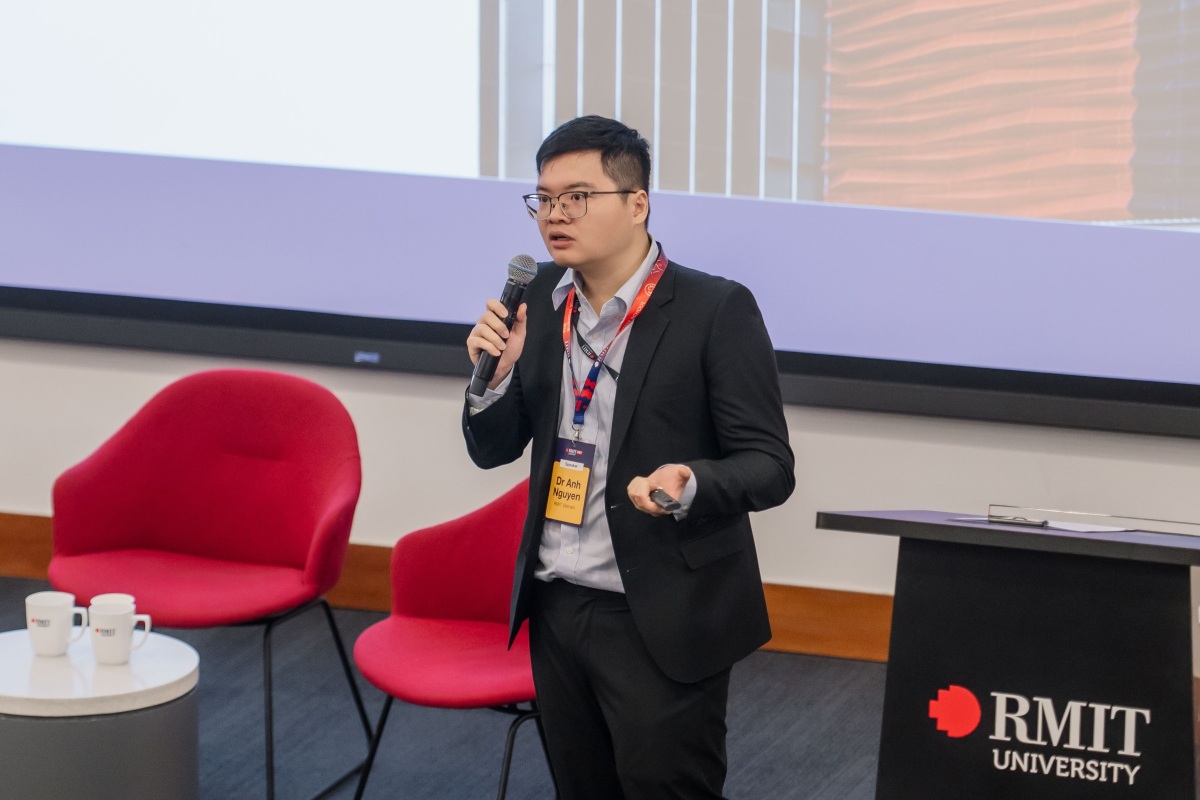
Dr Tuan Anh speakingDr Nguyen Tuan Anh talked in depth about the research project. (Photo: RMIT)

The discussion is particularly relevant for Vietnam, where retail investors account for a significant share of market activity and sentiment can spread rapidly through digital channels. The country’s ambition to further develop its financial markets is also creating demand for better tools and evidence-based approaches to decision-making.

“Vietnam presents an interesting environment in which to study these questions because of its strong retail investor participation and the pace of development in its financial sector,” Associate Professor Binh said.

For Dr Tuan Anh, the broader significance of the project extends beyond any single market or asset class.

“Our long-term goal is to develop approaches that make AI-generated insights more transparent and more reliable,” he said. "That is increasingly important as investors and organisations look for ways to incorporate AI into decision-making while maintaining confidence in the information they use.”

Story: Ngoc Hoang

Related news