
International lessons and policy choices for Vietnam’s national brand

International lessons and policy choices for Vietnam’s national brand

As Vietnam enters the “era of national rise”, the question of how the country defines and projects its national brand is taking on renewed strategic importance.

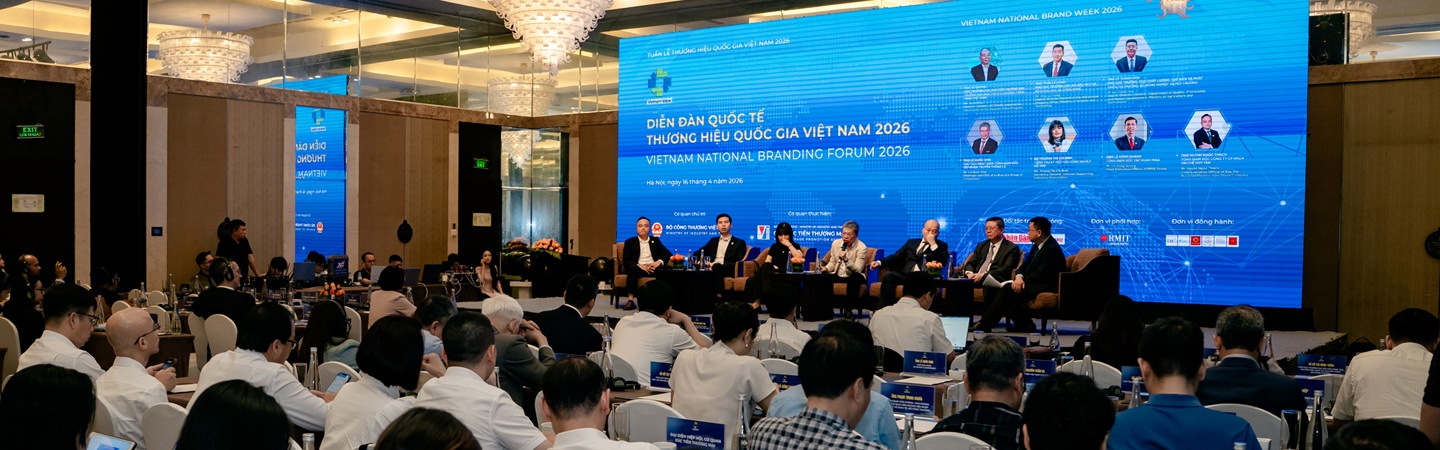
This question was a focus of the Vietnam National Branding Forum 2026 on 16 April in Hanoi. Organised by the Vietnam Trade Promotion Agency (Vietrade) under the Ministry of Industry and Trade, in partnership with RMIT University Vietnam, the forum convened policymakers, enterprises, and international experts to discuss Vietnam’s path toward a stronger global standing in the 2026-2030 period.

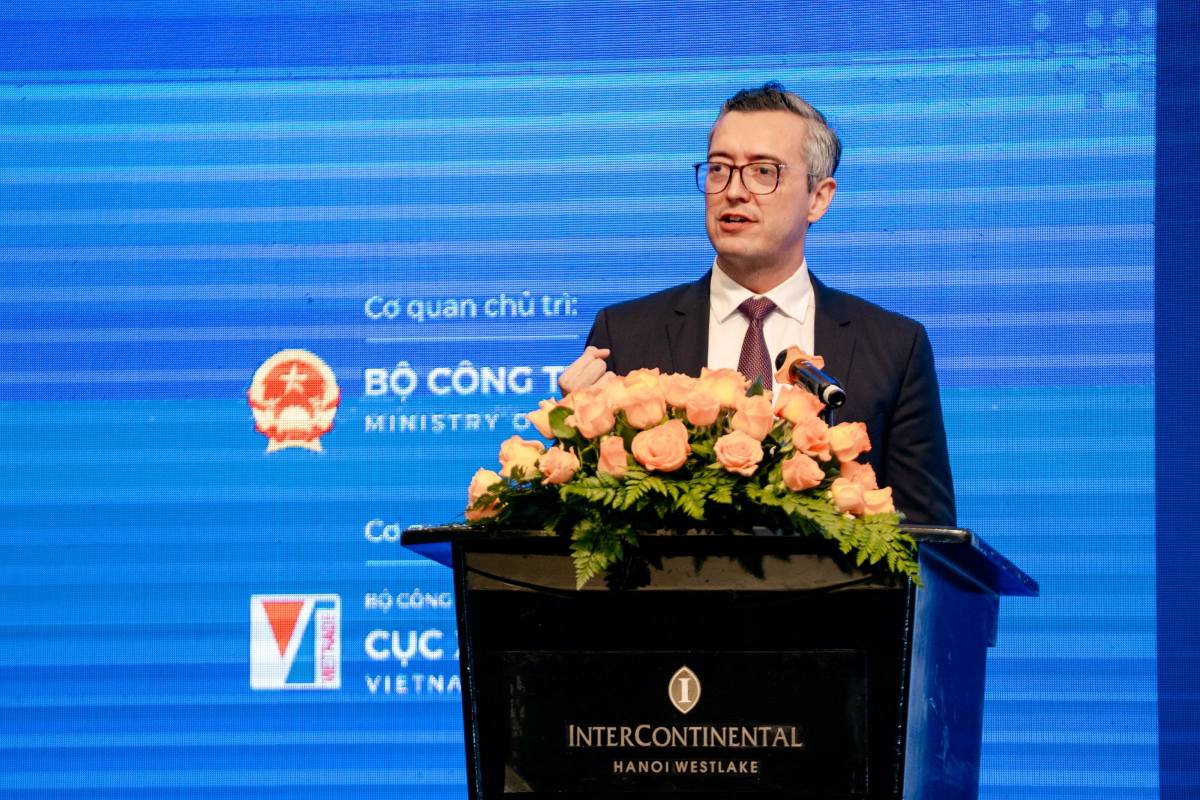
In his presentation, Dr Santiago Velasquez, Interim Senior Program Manager of the MBA and Master of International Business programs at RMIT Vietnam, highlighted that nation branding should be understood through a policy lens. Drawing on international experience, he stressed that reputation is built through long-term development choices rather than communication tactics.

“Globally, successful nation branding is not a marketing exercise, but a long-term public policy strategy,” Dr Velasquez said. “Countries that perform well do so because their real economic, governance, cultural, and technological systems consistently reinforce a clear national promise.”

Santiago speaking at a lecternDr Santiago Velasquez speaking at the forum. (Photo: RMIT)

Lessons from the Korean Wave

The RMIT presentation drew on several international success stories in nation branding, including those of South Korea, Japan, Germany, Singapore and Estonia. Among them, the Korean Wave, or Hallyu, offered interesting lessons for Vietnam.

South Korea’s investment in cultural industries emerged after the economic shock of the late 1990s, as policymakers identified creative sectors as high‑value, globally scalable, and less capital-intensive contributors to growth. Over time, cultural success became closely connected with trade promotion, tourism development, and consumer goods exports.

Cultural familiarity helped build trust, which manufacturers and service providers were then able to convert into global market access. Large corporations and small firms alike benefitted, and cultural content became a long-term asset within Korea’s development strategy.

Dr Velasquez noted that the effectiveness of this approach lay in long-term policy continuity and clear role division. Public institutions focused on building enabling ecosystems, while the private sector determined content and market direction.

“The Korean government did not centrally script storylines, themes, or ideological messages of K-dramas, K-pop lyrics, or films as part of the Hallyu strategy,” Dr Velasquez pointed out. “The state built the ecosystem, and the market decided the content.”

Further implications for Vietnam’s national brand

RMIT’s presentation examined how international experience translates into concrete recommendations for Vietnam. The key message was that nation branding should be understood as the combined outcome of development policies, and implementation, rather than a parallel activity focused on external promotions.

In practice, this means that decisions on industrial upgrading, innovation, standards, governance reform, and sustainability all directly shape how Vietnam is perceived internationally, whether or not they are labelled as “branding” initiatives.

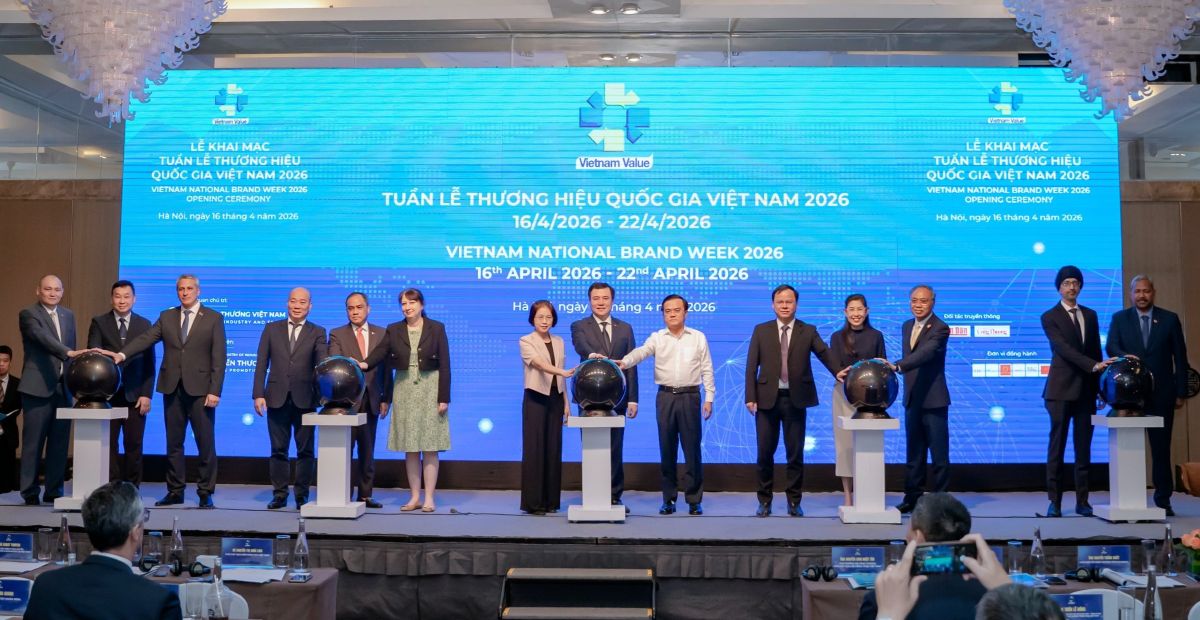
Launch ceremony of National Brand WeekThe official launch ceremony of the Vietnam National Brand Week 2026. (Photo: RMIT)

A further implication concerns the role of enterprises as the real carriers of a nation’s brand. Drawing on the experience of South Korea, Germany, and Japan, Dr Velasquez emphasised that national brands are carried in practice by firms, products, technologies and standards, rather than by a single official narrative.

For Vietnam, this points to a clear policy direction: nurturing a group of globally competitive Vietnamese enterprises that embody national brand values such as quality, reliability, innovation, and sustainability.

To support companies, particularly SMEs, the RMIT academic suggested channelling part of national branding resources toward programs that help Vietnamese firms meet and showcase their international standards more effectively.

Strategic questions for the next five years

Speaking after the forum, Dr Dang Thao Quyen, Interim Associate Head of the Management Department at RMIT Vietnam and an expert in international business, highlighted public governance quality and institutional design as central to the credibility of Vietnam’s national brand.

Drawing on examples from Singapore and Estonia, Dr Quyen noted that efficient, transparent, and predictable public governance strongly shapes international perceptions of a nation.

“When investors, exporters, or skilled professionals interact with public institutions, those experiences become part of how a country is judged,” Dr Quyen said.

She also reaffirmed the importance of long-term coordination. International experience, including Korea’s Hallyu strategy and Singapore’s reputation built on governance and trust, shows that nation branding benefits from institutional stability and policy continuity, particularly when enterprise internationalisation and national positioning are pursued in tandem.

For Vietnam, this suggests moving gradually toward a “whole-of-government” nation branding framework that supports cross‑ministerial cooperation, while aligning the Vietnam Value program with the Go Global program as complementary policy instruments.

The strategic question facing Vietnam is evolving. It is not only “How Vietnam is presented to the world?”, but increasingly, “What values, capabilities, and standards does Vietnam seek to consistently demonstrate to the world in the new era?”

As Vietnam continues its transition toward higher value creation, how it answers that question will play a defining role, RMIT experts believe.

Story: Ngoc Hoang

Related news