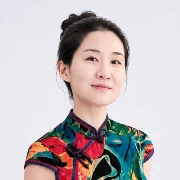
Bin Youn
Details
 College: School of Communication & Design
 Department: School of Communication & Design
 Campus: Saigon South Campus Vietnam
 bin.youn@rmit.edu.vn
 ORCID: 0009-0007-8814-6870
 LinkedIn
About
Bin Youn is an interdisciplinary artist, educator, and researcher based at RMIT University Vietnam, where she serves as Course Coordinator and Associate Lecturer in Digital Media. She holds an MFA in Studio Art from California State University, Long Beach (2023), where she received the Distinguished Achievement in Creative Activity award.
Her artistic practice operates at the intersection of lens-based media, interactive installation, and embodied sensing. She investigates how computational systems can mediate relational awareness across bodies, cultural knowledge, and environment, approaching AI as a relational medium and drawing on Eastern knowledge systems as structural paradigms for interaction design. Her work treats displacement and cultural difference as generative forces rather than obstacles.
Her practice and research are grounded in the cultural contexts of Southeast Asia and East Asia, engaging Eastern knowledge systems, visual traditions, and care practices as material for interaction design and artistic inquiry. She has exhibited research outputs across Vietnam and Malaysia, presented peer-reviewed work at international conferences across the Asia Pacific, and co-moderated the "Beyond the Global North" session at ACM SIGGRAPH DAC SPARKS. She leads an accepted workshop at ISEA 2026, co-presented with Patrick Hartono, investigating how cultural texts and handwritten memory can be transformed into volumetric 3D constellations using TouchDesigner. She led the M-NODE Cross-Cultural Hackathon between Dong-Ah Media and Arts Institute (Korea) and RMIT Vietnam, and served as creative director for Beyond 1&0, Digital Media Program at RMIT Vietnam's first external group exhibition.
As an educator, she developed the rễ-root pedagogical framework, an exhibition-centred teaching model that replaces traditional portfolio assessment with physical exhibitions, grounding collective creative practice in cultural context.
Her current research investigates cosmotechnics, collective sensing, and Asia Pacific cultural heritage as interaction design material, working toward a practice-based PhD in relational ecologies, AI, and interactive media installation.

Research interests
- Interactive media installation
- Embodied and collective sensing
- Practice-based research
- AI as relational medium
- Cosmotechnics and Eastern knowledge systems
- Asia Pacific cultural heritage and interaction design
- Lens-based and spatial video practice
- Cross-cultural pedagogy and exhibition-centred learning
