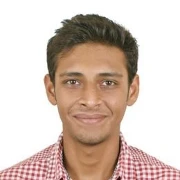
Aman Jaswal
Details
 College: School of Communication & Design
 Department: School of Communication & Design
 Campus: Saigon South Campus Vietnam
 aman.jaswal@rmit.edu.vn
 ORCID: 0009-0006-1956-5409
Open to
- Masters Research or PhD student supervision
- Career advice
- Collaborative projects
- Join a web conference as a panellist or speaker
- Industry Projects
- Media enquiries
About
Dr. Aman Jaswal is an academic in Sociology and International Relations, serving as a Lecturer International studies at RMIT Vietnam. He earned his PhD in Sociology and International Relationsfrom the University of Staffordshire, UK, as a UK ESRC-funded doctoral scholar, and received an Alan Turing Grant to support his international fieldwork. Alongside his doctorate, he holds a Post Graduate Certificate in Higher Professional Education Teaching and is a Fellow of the UK Higher Education Academy, reflecting his commitment to innovative pedagogy and academic excellence.
Dr. Jaswal’s work bridges research, teaching, and policy engagement. He has designed curricula in Political Science, Sociology, and International Relations under India’s NEP 2020 reforms, mentored students across disciplines, and published widely on topics including Kashmir, insurgency, and the shifting contours of global security and governance. His broader perspective integrates globalisation, social change, and interdisciplinary approaches to politics and sociology, while fostering dialogue between academia, media, and policymaking communities.

Academic positions
- Associate Professor and head of Department
- Shree Guru Gobind Singh Tricentenary University
- Liberal Studies and Social Sciences
- Gurugram, India
- 3 Mar 2025 – 31 Oct 2025
- Lecturer
- University of Staffordshire
- Stoke-on-Trent, United Kingdom
- 13 Dec 2023 – 1 Sep 2026

Degrees
- Masters Level, Arts
- University of Lincoln
- United Kingdom
- 2017 – Present
- Ph.D, Arts
- University of Staffordshire
- United Kingdom
- 2020 – 2024
- Advanced Diploma, Teacher Education
- University of Staffordshire
- United Kingdom
- 2021 – Present

Teaching interests
- Courses taught — I teach Global Political Economy and Global History in the International Studies programme at RMIT University Vietnam. My wider undergraduate and postgraduate teaching covers international relations theory and practice, foreign policy analysis, global and regional security, terrorism, and strategic studies.
- Curriculum design and courses taught/contributed — War in Theory and Practice; Understanding Terrorism: Causes and Theories; Contemporary Terror Networks; Media representation and society; Introduction to IR; Introduction to criminology; global and regional security (part of the weapons instructir training course for MoD)
- Pedagogy — I use research-led, student-centred teaching that combines flipped classrooms, policy simulations, role-play, and applied research. In crisis-management and conflict-negotiation exercises, students take on roles as advisers, analysts, or mediators to assess evidence, weigh competing priorities, and justify their decisions.
- Practitioner education — I delivered specialist teaching on South/South East and West Asia security dynamics for the UK Ministry of Defence’s Qualified Weapons Instructor Programme, with a focus on borderlands, insurgency, and governance.

Research interests
- International security and the geopolitics of the Global South — Regional rivalries, great-power competition, and their implications for security, with a focus on South Asia.
- Political violence and asymmetric warfare — Terrorism, insurgency, counterinsurgency, and hybrid warfare, with an emphasis on how and why armed movements evolve and how states respond.
- Identity, nationalism, and conflict in Kashmir — Kashmiriyat, competing political identities, and the shift from nationalist to pan-Islamist narratives within the Kashmir insurgency.
- Legitimacy, media, and strategic narratives — How states and non-state actors use media and propaganda to justify violence, mobilise support, and contest legitimacy.
- Security governance and borderlands — How states and armed groups exercise authority in contested territories, particularly in South Asia.
- Peace and conflict studies — The intersections of conflict, gender, development, and human rights, alongside migration, forced displacement, and refugee and diaspora studies.
- Interdisciplinary social science — Drawing on international relations, sociology, and political science to examine how power, identity, and institutions shape conflict and security.